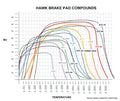
Hawk Performance HB718G.654 is a set of brake pads in the DTC-60 compound, a motorsports compound. The pad thickness is .654. DTC-60 has an optimal temperature range of 700-1100 F and an operating range of 400-1600 F. DTC-60 is a high torque compound. These pads are designed for iron/metal rotors and are not compatible with carbon ceramic rotors.
Notes:
- Very low abrasive rotor wear.
- Popular choice on lightweight front axle applications, with or without ABS.
- Applicable to NASCAR/NASCAR modified, ARCA, Super Late Models, pavement circle track, Pro 2/Pro 4 Off Road Trucks/Pro Lite, Sports Car/GT/GS and Open Wheel/Formula.
Specifications:
- Brand: Hawk Performance
- Part Number: HB718G.654
- Compound: DTC-60
- Compound Type: Motorsports
- Pad Thickness: .654
- Optimal Temperature Range: 700-1100 F
- Operating Temperature Range: 400-1600 F
- Torque: High torque
- Rotor Compatibility: Iron/metal rotors
Applications
- AP Racing/Alcon HB110 with 42mm Rad Depth
These pads fit AP Racing and Alcon calipers that use the HB110 pad shape with 42mm rad depth. Confirm the caliper model and pad shape before ordering.
Track use: This compound is intended for track and competition use and is not intended for street driving.
FAQ
What calipers does the Hawk Performance HB718G.654 fit?
It fits AP Racing and Alcon calipers that use the HB110 pad shape with 42mm rad depth. Confirm the caliper model and pad shape before ordering.
What compound is the Hawk Performance HB718G.654?
It uses the DTC-60 compound, a motorsports compound, with an optimal temperature range of 700-1100 F and an operating range of 400-1600 F.
How thick are the Hawk Performance HB718G.654 brake pads?
The pad thickness is .654.
Can the Hawk Performance HB718G.654 be used with carbon ceramic rotors?
No. These pads are designed for iron/metal rotors and are not compatible with carbon ceramic rotors.
Can the Hawk Performance HB718G.654 be used for street driving?
No. The DTC-60 compound is intended for track and competition use and is not intended for street driving.