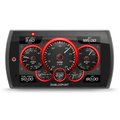
The DiabloSport Trinity 2 EX Platinum PCM swap kit is an in-dash tuning and monitoring solution for 2015-2017 Dodge Charger and Challenger models with the 5.7L, 6.4L, or 6.2L HEMI. These factory muscle cars ship with locked PCMs that block traditional tuning, so the kit supplies an unlocked PCM through DiabloSport's swap program. Preloaded with dyno-tested calibrations, the Trinity 2 Platinum delivers gains of up to 30 rear-wheel horsepower over stock while sharpening throttle response and refining eight-speed transmission shift behavior.
Specifications:
- Product line: DiabloSport Trinity 2 EX Platinum
- Type: in-dash performance programmer and monitor with PCM swap tuning kit
- Five-inch color capacitive touch screen with swipe control
- High-speed data logging with 5-volt inputs
- Preloaded dyno-tested performance tunes
- Accepts custom tuning from the DiabloSport CMR network
- Includes one-time unlocked PCM cross-shipment and prepaid core return
- Part number: 9320-X
Fitment: 2015-2017 Dodge Charger and Challenger 5.7L, 6.4L, and 6.2L HEMI.
Emissions compliance: This part is legal for on-street use under the EPA Tampering Policy of November 23, 2020 in states that follow that policy. It is not currently legal for sale or use in California, where CARB testing is pending. A California Proposition 65 warning applies.
FAQ
What comes in the Trinity 2 PCM swap kit?
The kit includes the in-dash Trinity 2 EX Platinum programmer and a one-time unlocked PCM cross-shipment, with a prepaid label to return the original locked PCM as a core.
Why is a PCM swap required?
These Dodge, Chrysler, and RAM models ship with locked PCMs that block traditional tuning. The unlocked PCM supplied in the kit restores tuning access for the Trinity 2.
Does it support custom tuning?
Yes. The Trinity 2 runs preloaded dyno-tested tunes and also accepts custom calibrations through the DiabloSport CMR tuner network.
Is this kit legal in California?
No. This tuning kit does not currently carry a CARB Executive Order and is not legal for sale or use in California. It is intended for use in states that follow the EPA Tampering Policy of November 23, 2020.